
You can always tell which doctor hasn’t ever been a patient before. Or at least in any meaningful way. Sometimes, I hear people say something like, “I could never imagine giving birth outside of a hospital.” I think to myself, “I mean, I wouldn’t recommend it either, but have you ever felt completely belittled by someone on your care team? Or suffer several nights without sleep because of the malfunctioning bed alarm? The birthing experience is supposed to be enjoyable.”
In my life, I’ve had several experiences as a patient that have made me a better doctor. These moments helped me understand patients at a level that could never be taught in medical school or residency training. While there are many more than are probably appropriate to share, here are two that influenced me most.
A Tale of Two OB’s
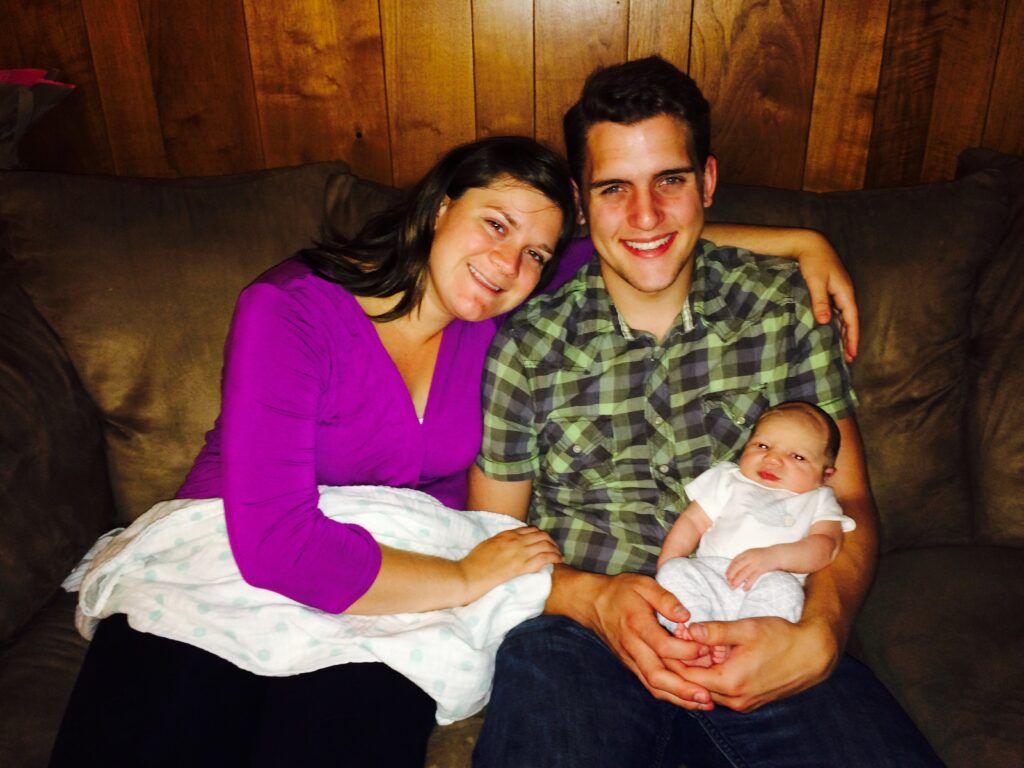
My first child entered the world two weeks late. My wife and I had an idea of how we would like for the birthing process to go, and an induction at 42 weeks was not on the bingo card. So there we were, sitting in an old hospital room, trying to follow our birth plan as much as the induction would allow.
It didn’t go well.
The first day of the induction was miserable. Pitocin all day, no food allowed for my wife, complete lack of progress. It hurt to see my wife have her dreams of the ideal birth story shatter before our eyes. Then, late in the afternoon, the seasoned OBGYN (with whom I had worked before and whom I still respect) burst into the room and said, “Welp, either we break your water or you’re getting a c-section.” It was not a gentle statement.
A “water break” was a no-go for the birth plan. So was a C-section (as long as things looked okay). And honestly, my frustration with the OB had less to do with the proposed plan and more to do with the abrasiveness. My wife and I felt like a burden.
Eventually, after many undeserved tears, we decided to pause, eat, and rest. We’ll try again in the morning by breaking her water and starting the pitocin.
The next morning, Dr. Brianne Brandt-Griffith* took over and completely changed the experience. She treated us like friends. She clearly read my wife’s birth plan. She sought my wife’s comfort and experience over her own preferences for the day. She let me, a third year medical student, deliver my own son.
We didn’t need condescension, we needed an invitation. With an invitation, the patient-doctor relationship changes from talking face-to-face with conflicting agendas to walking shoulder-to-shoulder with a common goal.
I’ve delivered hundreds of babies since then, and each parent gets the same attention that Dr. Brandt-Griffith gave us.
*I’ve added BBG’s name because she’s amazing and I will freely and openly advertise how amazing she is.
I Need a Call from my Doctor
Trivia question: Which profession has the highest rate of thyroid cancer?
Answer: Healthcare professionals.
The reason for this may be surprising. It’s not necessarily because of some environmental exposure, it’s because we actually go looking for nodules. Most people don’t practice physical exams or ultrasound on their necks, but healthcare students sure do. When they do, they find nodules that need to get biopsied. Many of those biopsies confirm cancer.
But here’s where it gets interesting: A large percentage of thyroid cancer is completely harmless, and will not lead to any significant life impact. Many people in the general population have the same exact nodules, they’ll just never know because they’ve never looked. They live their lives in blissful ignorance.
So you’d think that when they found a nodule on a medical student ultrasound training day, I wouldn’t be anxious. I knew that the vast majority of thyroid nodules are insignificant, after all. But when my follow-up ultrasound came back in the highest risk category for cancer, all of that head knowledge melted away.
I knew that it was very unlikely to be of consequence. Like I know that a cast iron pan is hot when it comes out of the oven.
But on a different level, I knew that a cancer diagnosis would change my life. And this knowledge only comes with the experience of touching the hot cast iron pan.
After my thyroid biopsy, I shut off all notifications on my phone and just waited for my doctor to call with the results. I was scared.
In that moment, my head knowledge meant nothing to my heart. No amount of study could prepare me for the results. What I needed was a person to come alongside me and tell me it’s okay.
The biopsy was normal, but the fear of those days will stay with me.
Relationship to the Core
At the core of these experiences, we find a common truth: the field of medicine is more than just prescriptions and procedures. It’s a relationship between two people. Whether it’s coming alongside an anxious and disappointed couple or calling a patient to relay results, the doctor patient relationship is the most important part of my job.